Flam Tap at 100 BPM: Two Hands, One Sound
A flam is two hands landing almost together — the grace note a few centimetres off the drum, the primary note on it. The flam tap is that sound on every stroke,
On this page
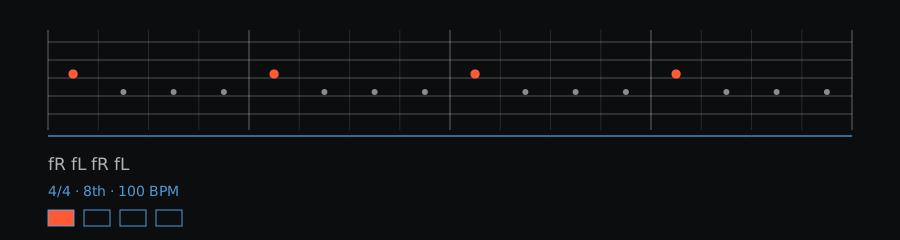
A flam is two hands landing almost together — the grace note a few centimetres off the drum, the primary note on it. The flam tap is that sound on every stroke, alternating hands, with the grace notes getting closer together as the tempo rises. At 100 BPM in eighths you have 300 ms between flams, which is enough time to place the grace note deliberately rather than letting it splatter.
Measure the flam before you speed it up
The gap between grace note and primary note should start around 25–30 ms, which is roughly a 32nd note at 100 BPM. Too wide and it becomes a drag; too narrow and the two hits fuse into a fat single stroke that sounds sloppy rather than thick. Use a metronome with a 32nd subdivision, or simply play a 32nd plus a dotted 16th and match the spacing by ear.
The grace note is played low — about 5 cm — and the primary note at full height. That height difference is what makes the flam audible; two notes at the same volume just sound like a mistake.
Then shorten it as tempo rises
As you push from 100 to 140 BPM the grace note must get closer, otherwise the flam blurs into a drag. Practise at 100, 112, 124, 136 and 148, checking at each step that you can still hear two distinct attacks. Most players find their ceiling is where the grace note can no longer be independently placed — that is your working maximum for now, and it usually moves up a few BPM per month.
Keep the primary note exactly on the click at every tempo. Rushing the primary note is the classic flam error, because the hand wants to close the gap by moving the loud note earlier instead of the quiet note later.
Grace note placement: high or low hand
In a French or American matched grip the grace note usually comes from the wrist with a small upward flick of the stick tip before the primary stroke. Practise the flam on one hand alone: 20 reps right, 20 reps left, watching that the grace note never bounces twice — a double bounce turns the flam into a drag, which is a different rudiment with a different sound.
Once single-handed flams are clean, alternate hands for the flam tap: right flam, left flam, at eighth-note spacing. This is where the leading hand has to keep the same stick height as the trailing hand.
Where it goes on the kit
Flam taps on the snare with the grace note on the rim is a standard orchestral colour. Flam taps moving between snare and tom are a rock fill device. Flam taps on the hi-hat as a two-handed 'chick' are a funk device when you close the hats with the foot on the primary note.
Pick one application per session and stay at 100 BPM until the flam width is identical in both hands — an asymmetric flam (wide on the right, tight on the left) is the most common thing a reviewer will hear in a recording.
What to hold on to
- Grace note 25–30 ms before the primary note, played from 5 cm against a full-height primary
- Shorten the gap as tempo rises or the flam turns into a drag
- Primary note stays exactly on the click; never rush it to close the gap
- Check flam width in both hands — asymmetry is the giveaway in a recording