Double Paradiddle at 80 BPM: Six Notes That Fit Three Beats
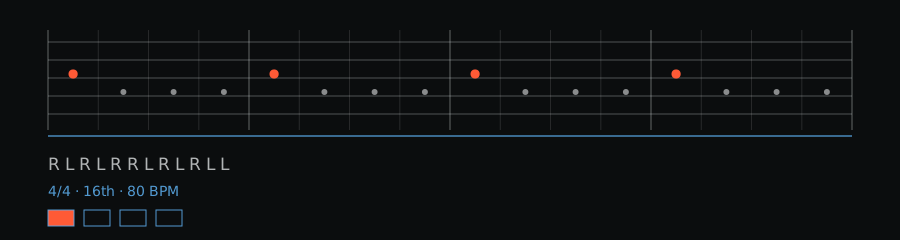
The double paradiddle is RLRLRR LR LRLL — six strokes that span three eighth notes, or one and a half beats in 4/4. Because six does not divide evenly into four
On this page
The double paradiddle is RLRLRR LR LRLL — six strokes that span three eighth notes, or one and a half beats in 4/4. Because six does not divide evenly into four, the pattern rotates against the bar: the double stroke lands on a different beat every time round. At 80 BPM you play it as sixteenth-note triplets or as sixteenths in a three-beat phrase, and both readings teach you something different about how the accents line up with the click.
Pick a reading and stick to it
Reading A: play the six notes as sixteenth-note triplets — two groups of three per beat, so the pattern fits neatly inside two beats and the accent falls on the first and fourth stroke. Reading B: play the six notes as straight sixteenths, which makes the pattern straddle the beat and eventually wrap around the bar. Most method books use Reading A; the wrap-around of Reading B is what makes it musical.
Choose one for a session and write the count above the staff. Mixing the two in one practice block is the fastest way to lose the accent.
The double stroke is the hinge
RLRLRR has four single strokes then a double. If the double is late, the whole pattern limps, and it will always be late if you treat it as a reflexive bounce. Play the pattern with the double stroke deliberately flammed (two distinct hits, 30 ms apart) for a minute, then close the gap to zero. That over-articulation teaches the hand where the double belongs.
Then invert: play everything as singles and add the double only when the tempo forces you to. At 80 BPM you never need the bounce; at 130 you do.
Accent shifting through the six
Move the accent one stroke at a time through all six positions, two bars each, at a fixed 80 BPM. Position 5 (the first note of the double) is the hardest, because accenting it turns the double into a two-stroke pickup rather than a bounce. When you can accent position 5 cleanly, you can play the pattern anywhere on the kit without it falling apart.
This is also the pattern that transfers directly to Latin and Afro-Cuban vocabulary — the six-note cell against a four-beat bar is the same tension you find in 6/8 bell patterns.
Three short drills
Drill 1: two bars double paradiddle, two bars plain singles, at 80 BPM, no gap — the transition exposes whether the double was a real stroke. Drill 2: pattern on the snare, accent on the ride bell, hands fixed. Drill 3: pattern moving between snare and floor tom in three-note chunks, which forces the lead hand to keep flipping while the accent stays on the click.
Each drill is two minutes. Ten minutes a day for a week moves this pattern from something you can spell to something you can use.
What to hold on to
- RLRLRR / LR LRLL — six strokes, three eighth notes, rotates against the 4/4 bar
- Choose one reading (triplets or straight sixteenths) per session
- Position 5 accent — the first note of the double — is the hardest and the most useful
- Play the double deliberately flammed for a minute to teach the hand where it belongs