Single Stroke Seven at 80 BPM: Odd Numbers and the Hand Flip
Seven strokes starting on the right end on the right, so the next group automatically starts on the left. That built-in flip is the reason the single stroke sev
On this page
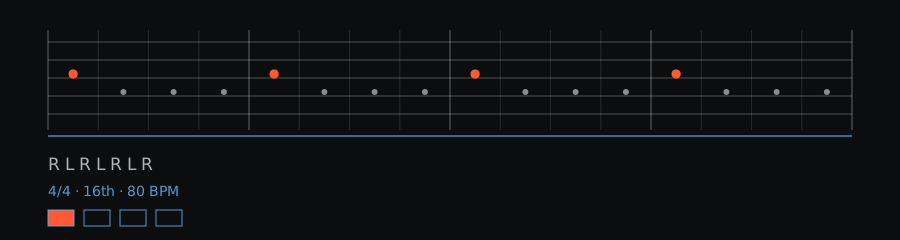
Seven strokes starting on the right end on the right, so the next group automatically starts on the left. That built-in flip is the reason the single stroke seven exists: it gives you a long single stroke run that alternates lead hands without you thinking about it. At 80 BPM sixteenths, seven strokes fill a beat and three quarters, and the last two strokes of the group always cross a beat boundary — which is where the timing errors live.
Count the group, not the beat
Count seven as 'one-e-and-a-two-e-and', then start the next group on the following sixteenth. The point is to feel the group as one seven-note unit rather than as a bar you keep re-entering. Metronome on quarters, group starting on every quarter-note-plus-three-sixteenths — an offset start that most players find harder than the pattern itself.
Write the count on paper once. Seeing seven strokes stride across the bar line explains why the figure sounds like it is always leaning forward.
Keep the seventh stroke as strong as the first
Long single stroke runs decay: by the fifth note the wrist has stopped turning and the strokes become finger flicks. Practise the group with an accent on note 1 and note 7 only, at a uniform height in between. If note 7 is weak, the group is collapsing rather than completing.
The other check is height consistency from the side view — film it once. A run that looks like a descending staircase is losing amplitude, and that is a muscular endurance issue, not a hearing one.
Moving the seven around the kit
Play the seven as snare-snare-snare-tom-tom-tom-tom, then shift the split point one drum at a time. The single stroke seven is a shortcut to fast tom fills precisely because the lead hand flips and you never have to plan a sticking. At 80 BPM start slow, then push to 100 with the same orchestration before adding a second drum change.
Try the same figure with a flam on the first note of each group — the flam forces you to place the accent precisely, which cleans up the last two strokes as a side effect.
Common faults
Rushing the fourth and fifth notes is the most frequent fault, because the group feels like it should end earlier than it does. The second is the flipped hand losing the first note: when the left hand starts the group, note 1 is often quieter. The third is a mental hiccup at the bar line, where players try to re-align the group to beat one even though the figure is designed not to.
Fix all three with a two-minute drill: play seven strokes, rest for exactly five sixteenths, repeat. The rest forces the group to stay seven long instead of being padded to eight.
What to hold on to
- Seven strokes on the right end on the right, so the lead hand flips automatically
- Accent notes 1 and 7 to stop the run decaying to finger flicks
- Great tom-fill shortcut: move the split point one drum at a time
- Play seven, rest five sixteenths — the rest is what stops the group becoming eight