Single Paradiddle at 60 BPM: Accents That Move Without You
RLRR LRLL is the most useful eight-note pattern in drumming because the accent lands on a different hand each time it comes round. At 60 BPM sixteenths you have
On this page
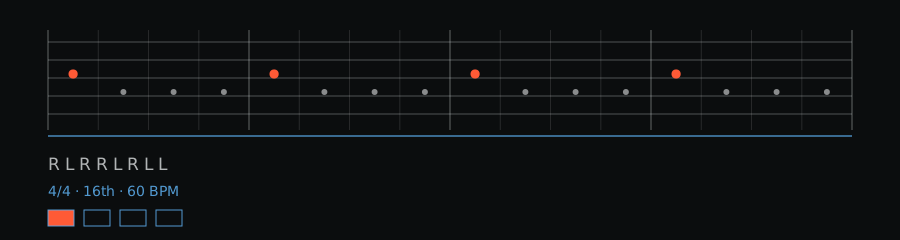
RLRR LRLL is the most useful eight-note pattern in drumming because the accent lands on a different hand each time it comes round. At 60 BPM sixteenths you have 250 milliseconds per stroke; each paradiddle takes two beats and returns to the starting hand, which is why it works as a loop. The drill here is not the sticking — most players can spell it — it is keeping the accent on beat one and beat three of the pattern while the hands stay level underneath.
Why the accent is the whole exercise
Play RLRR LRLL with no dynamic shape and it sounds like a fast single stroke roll with a stutter. Play it with the accent on the first note of each four, soft on the rest, and it turns into a groove fragment you can move around the kit. The accent is what makes the pattern readable, and it has to be produced by stroke height, not by gripping harder.
Put the accent at full stroke height (20 cm) and the three unaccented notes at 8–10 cm. The difference in physical motion should be obvious; if your accent sounds loud but your hand barely moves, you are squeezing the stick, which costs you the next stroke.
Playing it off the bar line
Once the plain version is even, displace the accent by one sixteenth at a time: accent the second note, then the third, then the fourth, keeping the sticking identical. After four passes the accent has walked once around the pattern and returned. This is the exercise that turns a rudiment into vocabulary, because it forces the loud note onto whichever hand happens to be there.
Keep the metronome on quarters throughout and count 'one-e-and-a' out loud. When the accent lands on the 'and', you will feel the pattern try to flip into its mirror — that resistance is the thing being trained.
Two-minute ladder, four rungs
Rung 1: 60 BPM, sixteenths, accents fixed, 30 seconds each hand leading. Rung 2: same tempo, accents displaced one note, reading left to right. Rung 3: 60 BPM with the pattern played as triplets instead of sixteenths — the eight sticking notes now span three beats, which changes where the accent falls against the click. Rung 4: back to sixteenths at 72 BPM, no accents at all, checking the pattern is still even.
Rung 3 is the one people skip and the one that pays: a paradiddle that survives a subdivision change is a paradiddle you actually own.
Faults worth recording
The double stroke in the middle (RR) usually arrives late because the hand has to turn twice as fast as the pattern implies. A second fault is accent creep, where the loud note drifts to the second of the pair. A third is a flopping elbow on the unaccented notes, which flattens them to a thud.
Record eight bars from the side at 60 BPM. The camera shows hand height; the microphone shows whether your two accents in a bar are actually the same volume.
What to hold on to
- Sticking RLRR LRLL spans two beats and returns to the starting hand
- Accent by stroke height (20 cm vs 8 cm), never by gripping harder
- Displace the accent one sixteenth at a time to make it vocabulary
- Rung 3 — same sticking over triplets — is the test that you own the pattern