Double Stroke Open Roll at 40 BPM: Getting the Second Note Free
An open roll is two clean single strokes per hand, not a buzz. The whole difficulty sits in the second note: it has to be produced by the wrist and fingers afte
On this page
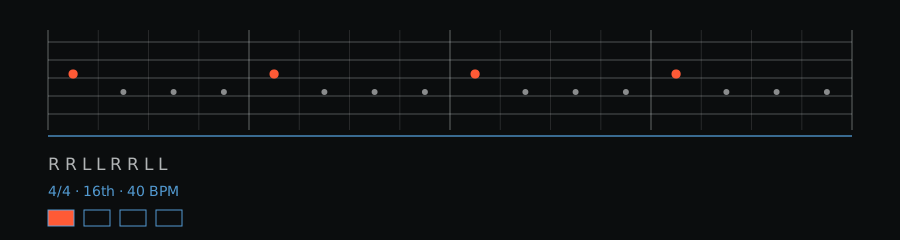
An open roll is two clean single strokes per hand, not a buzz. The whole difficulty sits in the second note: it has to be produced by the wrist and fingers after the rebound, at the same volume as the first, without the forearm tightening. At 40 BPM you play sixteenth notes, four strokes per beat, and each pair gets 375 milliseconds — plenty of time to feel whether the second stroke is being played or merely allowed to happen.
Open versus closed: what you are actually practising
A closed (buzz) roll presses the stick into the head so it bounces several times. An open roll plays every note as a deliberate stroke — RRLL RRLL. Orchestral snare work, drumline and most modern kit playing need the open version, because it is the one you can control dynamically. If your roll sounds like a hum rather than a series of hits, you are pressing.
The tell is in the last note of each pair. In a buzz roll it fades. In an open roll it lands with the same weight as the first note, and you can hear eight distinct attacks per bar at 40 BPM sixteenths.
Two heights, one wrist
Start with both strokes at 12 cm. The first stroke comes from a small wrist turn, the second from a wrist turn plus a pull of the back three fingers into the palm. Practise the pair on one hand only, ten times, then switch hands. If the second note is quieter, the fingers are not closing; if it is louder, you are adding forearm.
Once both notes match at one height, try the classic accent shape: loud-soft on the first pair, soft-loud on the second, so the accent travels through the bar. That exercise is what turns a flat double stroke into a musical one.
The three-minute build
Minute 1: right hand only, sixteenths, 40 BPM, listening for two equal notes. Minute 2: left hand only. Minute 3: alternating pairs, RRLL, with a metronome click on the quarter and a count of 'one-e-and-a'. Keep the tempo fixed for a full week before raising it — the double stroke degrades faster than the single stroke when you push.
When you do move, move by 4 BPM and drop the drill back to hands separate for the first minute at the new tempo. That one minute is where the new speed actually gets learned.
Where the roll falls apart
The usual failure is a hand that plays the first note loud and the second soft, giving a limping LLRR. The cause is almost always grip pressure: the back fingers stay open after the first stroke, so the second has no pivot. A second failure is the 'double bounce' — one motion producing two notes, which sounds right at 40 and falls apart at 90 because you never learned to place the second note.
Fix both with a pad and a mirror: watch the bead. If the bead dips below your chosen height after the first stroke and never returns, the second stroke is a bounce, not a stroke.
What to hold on to
- Open roll = two deliberate strokes per hand; buzz roll = press and let it bounce
- First stroke from wrist, second from wrist plus the back three fingers closing
- Three minutes daily: right hand, left hand, then alternating pairs RRLL
- If the second note fades, the back fingers are not closing — not a speed problem